For experienced force-free dog trainers and behaviourists
who are ready to go deeper with the cases that matter most.
From knowing the framework to working the hard cases – with certainty
Advanced Clinical Mastery Mentoring with Annie Phenix
Trauma-informed. Case-based. One-to-one.
Or …
You already know What To Do. So why are some cases still not moving?
You know why a dog living in chronic fear can’t learn. You understand what’s happening in their nervous system. You believe in the approach – you chose it deliberately, and you’ve seen what it can do.
And you’ve also had the case that didn’t respond the way you expected.
The dog who kept regressing. The owner slowly losing faith while you ran clean, careful protocols and – in the privacy of your own mind – wondered what you were missing. Not the theory, not the ethics, and certainly not the commitment to getting it right.
Just the thing that makes it work when progress is stalling.
Here’s what I’ve come to understand after more than two decades in this field: being able to talk about trauma-informed work and being able to navigate a complex case with it, start to finish, in real time – those are genuinely different skills.
The first one you can get from a course. The second one develops in a different way entirely.
That’s what this mentorship is about.
What The First eight months with two traumatised heeler Puppies taught me
When I brought Finn and Cooper home, I had been working with dogs for over two decades.
I had fostered and retrained more than 400 dogs from Texas shelters. I had worked with thousands of client dogs. I had just finished writing the book on positive training for reactive and aggressive dogs. I thought I understood trauma recovery.
And those two little cattle dog brothers showed me exactly what I didn’t know.
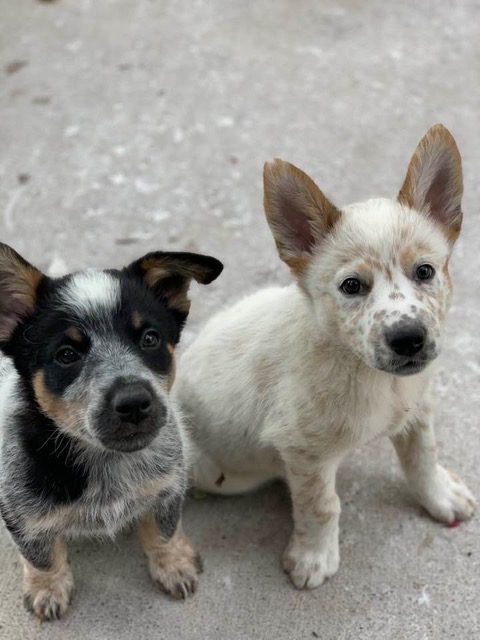
They came to me at five and a half weeks old – taken from their mother way too early, left alone in a backyard, fighting over kibble left out once a day. Covered in fleas. Two types of worms.
Their nervous systems had never once registered that the world was safe.
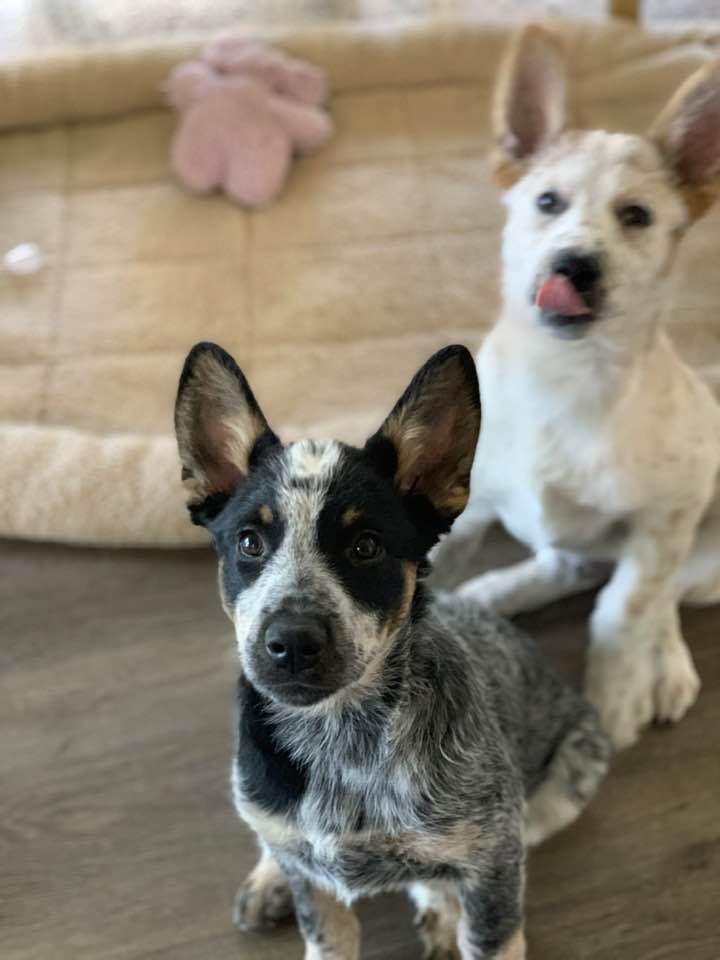
I knew what was happening in their bodies. I could describe it precisely. And it still took me nearly eight months to earn their trust, to help them know in their bodies that they’re safe.
Real change starts when a dog feels safe
Because what I realised – across years of good, ethical, careful work – was that I had been working with cases, asking the wrong first question. I was asking what do I do with this dog? when the question that unlocks everything is: where is this dog right now, and what needs to happen before anything else can?
I was going straight to the protocol. My timing was clean. My setups were careful. But I was building on a foundation the dog’s nervous system hadn’t finished laying yet – and so my results, while real, were fragile. Progress that plateaued. Changes that didn’t hold under pressure.
When I understood the correct order of things, things changed.
Cases that had been grinding started moving. Not because I found a new technique. Because I finally got the sequencing right. I built a framework around what Finn and Cooper taught me, and what I’ve since learned from working inside thousands of cases on the other side of that shift.
This mentorship is where I teach it – not as theory, but as something you apply to your actual cases, with me alongside you.

What it actually takes to close the gap between knowing and doing
There’s a reason the most skilled practitioners in any demanding field – surgery, law, elite sport – don’t just read about their craft and go practise it alone. They work alongside someone who has been where they’re headed, and can see what they can’t see when they’re caught up in the moment.
Not because they’re not good enough, but because being good isn’t the same as being able to see your own blind spots in real time.
This is exactly the problem with complex behaviour cases. When you’re managing the dog, reading the owner, tracking threshold, and trying to hold everything you know about nervous system regulation – all at the same time – you cannot simultaneously watch yourself do it.
You can’t see the moment you moved too quickly. You can’t feel that you tensed up before the dog did. You can’t notice that the question you didn’t ask in the intake is the reason you’re stuck in week four.
A course can teach you the framework. It cannot watch you work and tell you what it sees.
And yes, figuring it out alone – through trial and error across enough cases – works eventually. But it’s slow. And it’s expensive in the ways that matter in this field: dogs who stay stuck longer than they need to, owners who lose faith, and professionals who start to dread the cases that should be the most rewarding work they do.
Mentorship closes that gap faster – not by giving you more to learn, but by putting someone with a different vantage point inside your actual cases. Someone who can say: here’s what I notice, here’s what I’d look at first, here’s what you missed and why it matters.
That’s what changes a practice. Not more content.
What we’ll do together
Advanced Clinical Mastery Mentoring Trauma-informed. Case-based. One-to-one with Annie Phenix.
This isn’t a course. There’s no curriculum to work through, no modules to consume, no place where your question waits days for someone to answer it.
This is my eyes on your active cases. And the kind of clinical conversation that changes how you think in the room, not just how you think about the room afterward.
Six private 1:1 sessions
These are working sessions, not teaching sessions. You bring what you’re stuck on – a case that isn’t moving, a pattern you keep hitting, a decision you can’t make – and we work through it together in real time. You leave each session with a clear next move, not more to think about.
The Trauma Road Map
The framework I’ve developed across 4,000 dogs for navigating high-arousal cases, shut-down behaviour, and complex bite histories – the sequencing that determines what happens before anything else can. The order of operations, laid out so you can apply it case by case rather than reaching for it mid-session and hoping it works out.
A full clinical case study
A real case, broken down from first contact to resolution – what I saw, what I decided, where I had to stop and recalibrate, and why it worked. Not a polished success story. The actual clinical thinking, including the hard moments, so you can see what that process looks like from the inside.
The Diagnostic Owner Questionnaire
My intake tool, built to surface what standard questionnaires miss. The questions that tell you what’s actually going on before you’re even in the room – because what you learn before a session shapes everything that happens in it.
Extended education from the Course library
Your choice of four focused courses or two long-form programmes, selected together based on where your specific gaps are. Not a generic curriculum, but a deliberate deepening of exactly what you need.
An open, flexible timeline
We’ll move at the pace of your caseload and your life commitments. No countdown clock, no rigid schedule, no pressure to move faster than your cases allow. Real clinical development doesn’t happen on a fixed calendar.
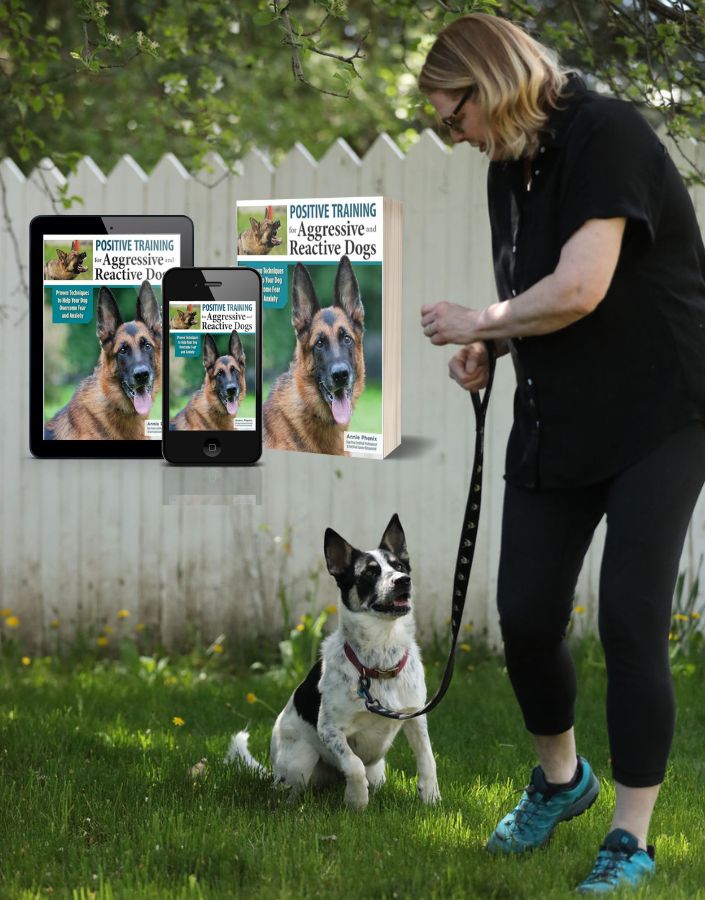
Why Annie?
Twenty-five years. More than 4,000 dogs. Every kind of case – from straightforward puppies to severe aggression that had already been through multiple professionals before landing with me.
I’m a Certified Canine Behaviourist (INTODogs), a Certified Family Dog Mediator, and one of the first Fear Free Certified Trainers in the United States.
I’m the author of two international bestsellers on positive training for reactive and aggressive dogs. And I founded the non-profit Phenix Advocacy Center for R+ Canine Professionals – because I know what this work costs the people who do it with integrity, and I think they deserve proper support too.
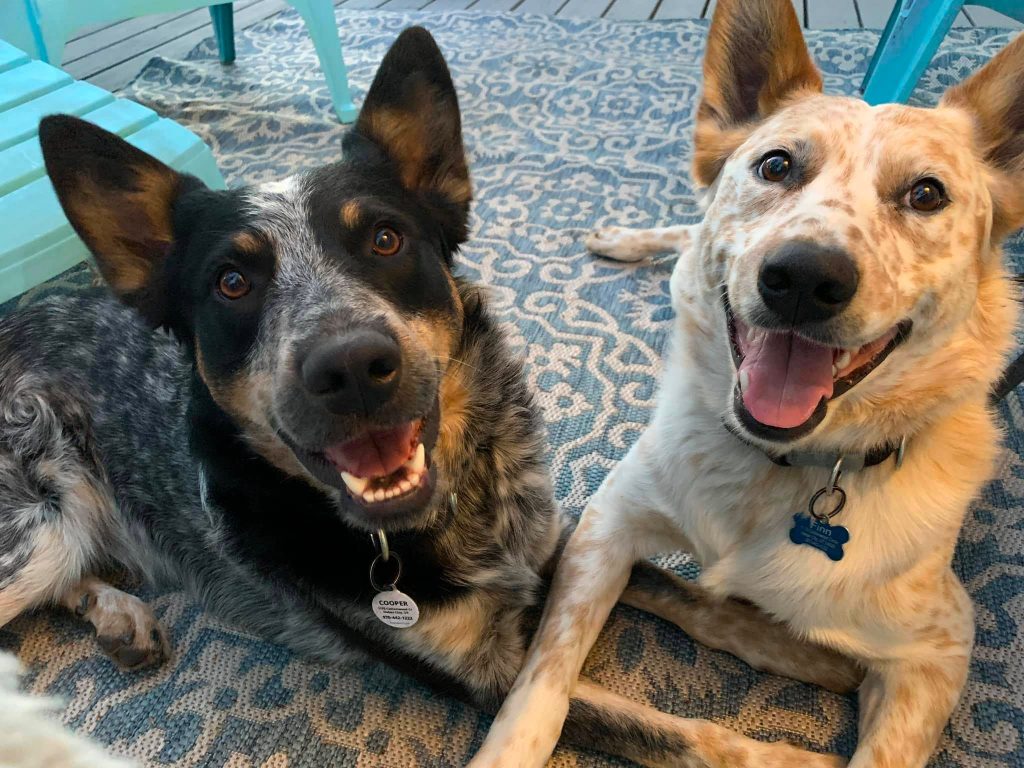
What I bring to this mentorship specifically isn’t just the credentials. It’s that I’ve lived trauma recovery from the inside, through my own dogs and my own history. That’s where the framework came from. Not from a course. From 4,000 dogs and eight months on the floor with two traumatised heelers who taught me more than any certification ever did.
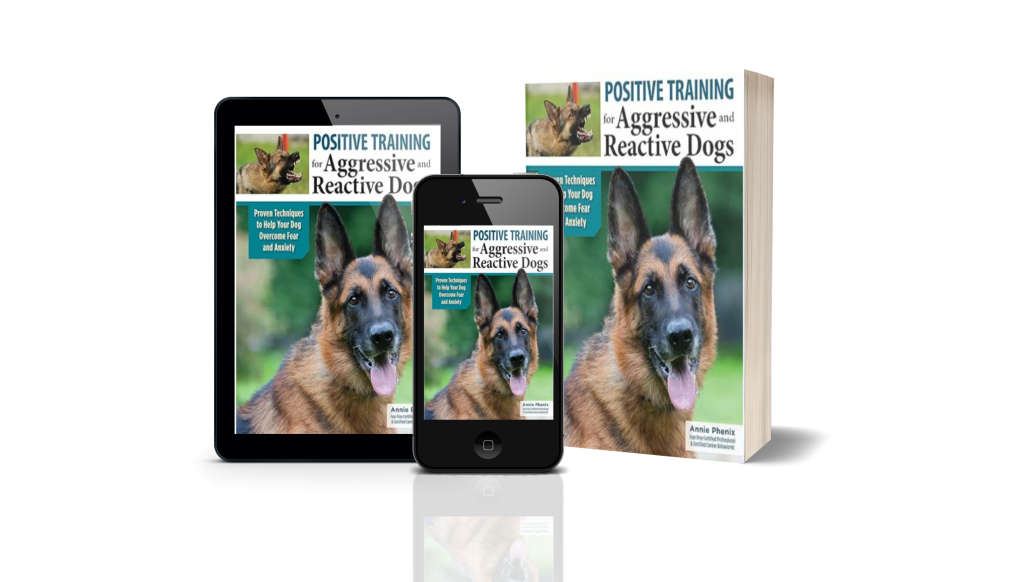
What people have said about Annie’s bestselling book Positive Training for Aggressive and Reactive Dogs
A few things you might be wondering about
“I’ve done professional development before. It always shifts my thinking but never quite my practice.”
I hear this more than almost anything else from experienced professionals. And it makes complete sense – because that’s what content-based learning does. It gives you a better map. It doesn’t take you into the terrain.
What changes practice is someone watching you navigate your actual clinical decisions – not the theory behind them, but the real-time choices you make when you’re in a session with a dog who’s shutting down and an owner who’s running out of patience – and reflecting back what they see. No course can do that. It’s the one thing 1:1 case-based mentorship does that nothing else comes close to.
“I’ve been doing this for years. Looking for guidance feels like admitting I’m not far enough along.”
The most skilled practitioners I know – in this field and in others – work alongside mentors throughout their careers. Not because they lack competence. Because the cases that matter most are too important and too complex to navigate entirely alone, and because someone with a different vantage point will always see something you can’t see when you’re inside it.
Your experience isn’t incidental to this – it’s what makes it work. You bring the cases and the clinical history. I bring what I can see from the outside. Neither of us gets there without the other.
“Slow progress is the ethical option. I’m suspicious of anything that promises faster results.”
I held this belief too, for a long time. Until Finn and Cooper changed it.
When a dog’s nervous system has genuinely regulated – not suppressed, not managed, but actually shifted – the change is real and it holds.
Getting there faster isn’t less ethical. It means the sequencing was right. In my experience, when progress is consistently slow, that’s usually a signal: not of patience, but of something missing in the order of operations. When that falls into place, dogs move. Sometimes more quickly than any of us expected.
Will I be able to ask questions?
Yes. We’ll work closely together, and if you have any questions in between meetings, you’ll have access to a private space inside the Canine Trauma Clinic, so you’ll never have to guess.
What your practice looks like on the other side
Imagine this …
The hard cases stop being the ones you dread and start being the ones that show you what you’re capable of.
You walk into a complex session with a sequenced clinical approach – a real-time read of what this dog needs first, before anything else. Not a protocol you’re hoping will land. A decision you’ve already thought through, grounded in something deeper than technique.
Your clients feel it too. The ones who used to lose faith when progress stalled start trusting the process – because something in the way you hold the session has changed. Clinical certainty is something people feel before you explain it to them.
You take the cases you want to take. You charge what your expertise is worth. And the dogs that come to you because everyone else sent them home – the shut-down ones, the bite histories, the cases that seemed like too much – those become the work you’re most proud of.
Somewhere in all of that, you remember why you started doing this.
Two Paths from here
You can close this page, go back to your caseload, and keep figuring it out the way you have been.
Some cases will work out great. Some won’t. And that private moment of not quite knowing what to do next – the one you don’t mention to clients, or colleagues, or anyone – will keep showing up.
Or you can bring your hardest cases to someone who has been there, and stop navigating them alone.
That’s what this mentorship is. And it’s here when you’re ready.
Advanced Clinical Mastery Mentoring
Six private 1:1 sessions – The Trauma Road Map – A full clinical case study – The Diagnostic Owner Questionnaire – Extended education from the Phenix library – Open, flexible timeline.
$1,200 or two payments of $600
I work with a small number of professionals at a time. It’s the nature of this kind of work – I won’t take on more people than I can give proper attention to.
Not ready to commit yet? Come and ask me anything.
I’m hosting a free live Q&A on May 4th for professionals who want to understand what this mentorship involves before they decide.
No pitch. No pressure. Just the work, and your questions.
The dogs that find their way to you – the shut-down ones, the ones with histories nobody fully knows, the ones that other trainers couldn’t crack – they didn’t find you by accident.
You chose this work because you care about getting it right for the animals that need it most.
This mentorship exists for exactly that professional – the one who already has the heart and the knowledge, and is ready to add the clinical certainty that turns hard cases into the work they’re proudest of.
Come and do that work. I’ll be right there with you.
Annie.
PS: Still got questions? Simply reply to any of my emails or contact me directly at annie@phenixdogs.com